

How to Scale a Service Business in Australia: 2026 Marketing Automation Trends
Scaling a service business doesn’t have to mean hiring another office manager or staying glued to your phone. For tradies and other service operators, marketing automation for service businesses Australia can help turn missed calls, scattered customer details and patchy follow-up into a more dependable system for capturing and managing leads.
If you’re juggling jobs while trying to reply to every enquiry, you know how easily a good lead can slip through. More hustle isn’t always the answer. Connected systems can organise customer information, prompt timely follow-up and take repetitive tasks off your plate, so you can focus on quality work and the customers who need you.
This guide looks at practical automation trends for Australian service businesses, including AI receptionists, CRM integration, careful handling of customer information and measuring whether your setup is helping. You’ll learn how to move beyond disconnected tools and manual admin, and build digital infrastructure that supports growth without adding unnecessary complexity. The goal is a more consistent way to manage opportunities, smoother day-to-day processes and more time for your work.
Key Takeaways
- Spot when manual admin is taking time away from customer work, before assuming that hiring is the only solution.
- See how marketing automation for service businesses Australia can bring more consistency to lead capture, follow-up and customer records.
- Learn how a CRM can act as the central record for enquiries, while an AI receptionist can help manage incoming calls.
- Start with the biggest bottleneck, often lead capture or follow-up, and build your automation in manageable stages.
- Find out how Growth Local’s lead generation system setup, CRM setup and AI receptionist integration can support a connected lead process.
The Growth Ceiling: Why Traditional Scaling Fails Australian Service Businesses
The growth ceiling is the point where extra enquiries and jobs bring more admin without a clear improvement in how the business runs. You might spend evenings replying to messages, copying customer details between apps and trying to remember who needs a follow-up. The business may be busier, but your time is squeezed and it becomes harder to see which opportunities need attention.
Adding more people to complete work can help increase capacity, but it doesn’t automatically fix the systems behind it. If lead capture and follow-up are still manual, more work can mean more calls to return, more information to track and more pressure on you to keep everything moving. Scaling also means improving the process that supports the work, not just increasing the workload.
That’s where marketing automation for service businesses Australia can help. It’s not technology for its own sake. It’s a way to reduce repetitive admin and manage enquiries more consistently. The Marketing automation overview explains the broad idea: software can automate marketing tasks and connect activity with customer relationship management systems.
What is Digital Infrastructure for Service Businesses?
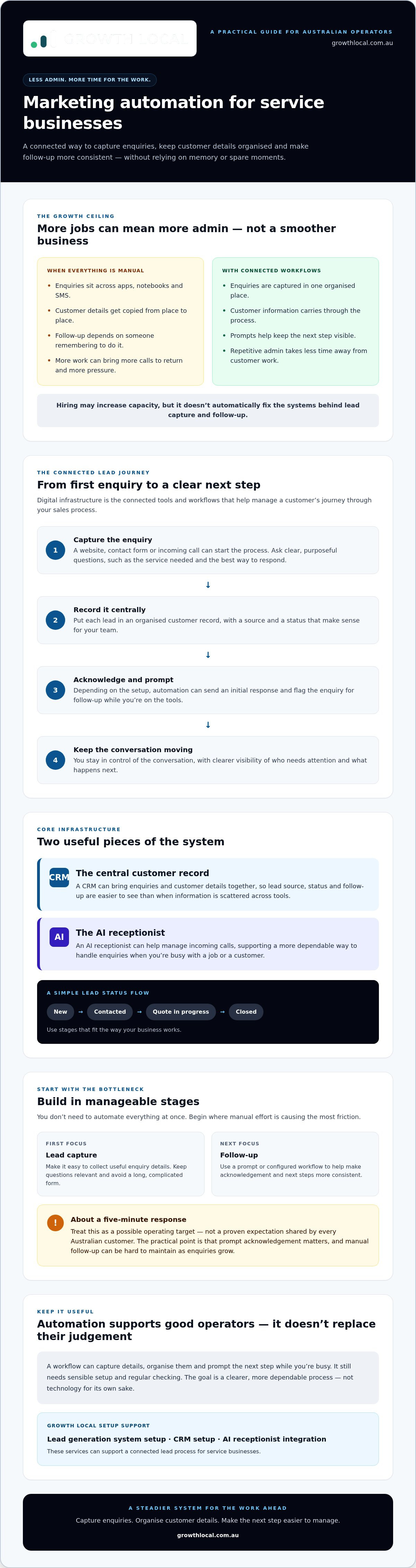
Think of digital infrastructure as the digital plumbing of your business. It connects the tools that capture enquiries, organise customer details and support follow-up, rather than leaving information scattered across apps, notebooks and SMS. Digital infrastructure is the connected tools and workflows that help manage a customer’s journey from first enquiry through to the next steps in your sales process.
A website can attract an enquiry, but it’s only one part of the process. Without a connected way to record and respond to that lead, the next step still depends on someone spotting a message and acting on it. A well-organised system carries information from one stage to the next, giving you a clearer view of who’s enquiring, where the lead came from and what needs attention.
The 2026 Reality: Speed to Lead is Everything
When someone needs a tradie or service provider, they may contact more than one business. A slow reply can leave the opportunity open for another business to respond first. The “Aussie hustle” has its limits: if you’re on a job, driving or speaking with a customer, you can’t always answer another call or message straight away.
A five-minute response is best treated as a possible operating target, not a proven expectation shared by every Australian customer. The practical point is that prompt acknowledgement matters, and manual follow-up is hard to maintain as enquiries grow. Automation can capture lead details, send an initial response and flag the enquiry for follow-up, depending on how the workflow is configured. You stay in control of the conversation, but you’re less reliant on memory and spare moments to get it started.
Marketing Automation: Your 24/7 Digital Employee
Automation won’t replace the judgement of a good operator, but it can take repetitive follow-up off your hands. Think of it as a digital assistant: it can capture enquiry details, organise them and prompt the next step while you’re on the tools. A workflow can keep running when you’re busy, but it still needs sensible setup and regular checking.
For marketing automation for service businesses Australia, the practical win isn’t simply doing more marketing. It’s getting more from the enquiries and systems you already have. A well-configured process can make responses more consistent, reduce manual data entry and keep prospects moving through your sales pipeline. Forbes Australia explores technology shifts that could reshape the business world, including the growing role of AI and digital adoption.
Automating the Lead Capture Phase
A basic contact form collects a name and number. An automated customer intake system can provide a more useful starting point by asking relevant questions, such as what service the person needs and how best to contact them. Keep questions clear and purposeful. For example, ask for the service required and the best way to respond, rather than requesting details you don’t need at the enquiry stage. A long, complicated form can put people off.
From the first enquiry, aim to record each lead in one organised place, with a source and status that make sense to your team. Use simple stages such as new, contacted, quote in progress and closed if they fit your process. That way, a request is less likely to get buried in an inbox or lost among SMS messages. Your next action is easier to see, whether that’s calling the prospect, sending a reply or checking the details.
Nurturing Leads Without the Manual Effort
Not every prospect is ready to book straight away. A planned SMS or email sequence can acknowledge an enquiry, share useful information and remind someone to take the next step. Set the timing and wording to suit your business, and make sure messages are relevant, accurate and appropriate for the recipient. Collect only the details you need for the next step, explain why you’re asking for them and make sure the information is handled carefully.
“Set and forget” is a handy starting point, not a reason to ignore your workflows. Review them regularly so details stay current and people can reach a real person when their situation needs a proper conversation. Personalise messages with information a customer has provided, and write in plain, friendly language. It should feel like a helpful business following up, not a string of generic automated messages.
Start with one bottleneck, such as missed enquiries or inconsistent follow-up, then build from there. If you’d like help considering how automation could fit your lead capture and customer follow-up, you can book a Growth Local demo.
The Core Infrastructure: CRM and AI Receptionists
A steady flow of enquiries is only useful if you can capture them, track what happens next and follow up. A CRM provides a central place to manage customer details, enquiries, quotes and next steps. Pair it with an AI receptionist, and you can create a clearer path from an incoming call to a recorded lead, even when you’re on a roof or in a meeting.
That doesn’t mean every lead is guaranteed to convert, or that a system can replace a useful conversation. It means fewer opportunities rely on someone remembering to copy a number out of a text or return a call after a full day on the tools. For marketing automation for service businesses Australia, connecting lead capture with CRM follow-up is what turns separate tools into a working sales process.
Why a Service-Specific CRM Matters
A spreadsheet might work when there are only a few enquiries to manage. As your workload grows, it can be harder to see which quotes need attention, whether a lead has been contacted or where customer information was saved. A CRM can make those details easier to organise and act on.
The setup should reflect how your business works. A solar business may need to track different enquiry details and quote stages from an electrical contractor. Before choosing or configuring a CRM, list the information you need to capture, the stages an enquiry passes through and who is responsible for each next step. A well-configured system can then help organise follow-ups and keep relevant customer information together. Explore the practical considerations in this guide to CRM implementation for small business Australia.
AI Receptionists: A Smarter First Point of Contact
Missing a call while you’re working doesn’t have to mean losing track of the enquiry. An AI receptionist can handle an initial interaction and capture useful details, depending on how it’s set up. Unlike a basic answering machine that simply takes a message, an AI system can be configured to guide an enquiry through a more structured exchange. Before relying on one, check what it can do, how it records information and when a customer can speak with a person.
For tradies, the appeal is practical: you can stay focused on the job while incoming enquiries have a clear route into your sales process. Growth Local integrates AI receptionists with CRM systems, helping organise captured details for follow-up. The CRM holds the customer record; the receptionist helps gather information at the front door.
Together, these systems can reduce the gaps where leads go unrecorded or overlooked. They’re not a magic switch, though. Set clear stages, decide who owns each follow-up and review the pipeline regularly. That’s how a spreadsheet-dependent process can become a more dependable sales workflow, without burying a small service business under complicated software.
How to Scale a Service Business AU: A Practical Roadmap
Moving from manual admin to automation works best as a steady build, not a big-bang software switch. Start with the bottleneck costing you the most time or causing the most dropped enquiries. For many service businesses, that’s lead capture: calls and form submissions arrive while you’re on a job, then follow-up gets pushed down the list.
Use time and consistency as practical measures of progress. Are you spending less time chasing details, copying information and remembering who to call? Are new enquiries being recorded in the same place, with a clear next action? A reliable workflow can be built once, refined as you learn what works and reused as enquiry volume grows. That’s a more grounded goal than expecting technology to run the whole business on its own.
Step 1: Audit Your Current Leakage
Before choosing tools, map what happens from first enquiry to quote and follow-up. Check call logs, email, web forms and SMS. Look for specific gaps: missed calls with no return contact, enquiries that never make it into a customer record, or quotes that sit without a clear next step. Note where each gap happens and what information is missing.
Track your “missed enquiry” rate for one week by recording every enquiry you couldn’t respond to promptly or couldn’t find a record of later. Use the same definition throughout the week so you’re comparing like with like.
To estimate the potential revenue impact, use your own figures rather than relying on a generic industry estimate. Note how many enquiries were missed, how many typically become paying customers and the average value of the work you win. This won’t tell you exactly what each missed call would have earned, but it can help you decide whether lead capture deserves to be your first fix.
Step 2: Implement Your Digital Foundation
Choose a CRM your team can use consistently, then set up a simple workflow for incoming enquiries. Start with the essentials: record the customer’s details, note where the lead came from, assign a status and make the next action visible. Test the process with sample enquiries that reflect common situations, such as a call, a website form and a request for a quote, before relying on it day to day.
Check the whole customer journey, not just the software settings. Does the enquiry reach the right place? Is the information clear? Can someone follow up without searching through several apps? Fix clunky steps before adding extra automation. Keep the first version focused on the tasks your team repeats most often.
Once the basics work, connect your lead-generation activity to the process. Local SEO can help prospective customers find your business, while a CRM gives you a place to manage enquiries that come through. Record the lead source consistently so you can see which channels are generating enquiries and what happens to them afterwards. The aim is a joined-up journey from discovery to follow-up, with a person ready to step in where judgement or a proper conversation is needed.
Build in stages: capture leads, organise them, automate a useful next step, then review the results. That’s how marketing automation for service businesses Australia can support growth while helping you win back time, rather than adding another dashboard to check.
Building Your Lead Generation Machine with Growth Local
You don’t need to configure every tool yourself. Growth Local sets up lead generation systems and CRM workflows to suit how your service business operates. The focus is practical: capture enquiries, organise customer details and make follow-up easier to manage.
That’s a practical approach to marketing automation for service businesses Australia. Rather than adding technology for its own sake, Growth Local helps connect the pieces that support lead handling, including CRM setup and AI receptionist integration. The aim is to create a dependable process behind the scenes, so you can spend less time chasing information and more time on quality work.
Before deciding what to implement, get clear on the problem you want the system to solve. Is it missed calls, inconsistent follow-up or customer details scattered across messages? A professional setup should start with that operational need, then configure the right tools around it. Consider how the system will fit your current process, what information it needs to capture and who will manage each follow-up.
Systems for Service Businesses and Solar
A service business’s enquiry process depends on the work it does. The information you need to capture, the stages a quote moves through and the follow-up that makes sense can all vary. Growth Local provides CRM implementation for service businesses and specialised solar CRM setup to help organise workflows around the work you do.
A well-planned system can make it easier to keep track of enquiries, prepare quotes and manage bookings, while reducing repetitive admin. Those are practical outcomes to work towards, not guaranteed results. The setup needs to match your team’s process, and the workflow should be tested before you rely on it day to day.
Take the First Step Toward Scaling
Manual hustle can get a business moving, but it’s hard to rely on as enquiries grow. Start by identifying the task that regularly pulls you away from customers or the job at hand. Then build a digital process around it, check that it works and improve it as you learn what your business needs.
Scaling is a choice to work smarter, not simply harder. A well-configured system can become a useful business asset, supporting consistent lead handling without asking you to remember every detail yourself.
Contact Growth Local to discuss your lead generation and CRM setup.
Build a Business That Grows Without the Manual Grind
Scaling doesn’t have to mean more admin, more phone-checking or more pressure on you. The practical starting point is to fix the biggest bottleneck, connect lead capture with your CRM and use automation to keep follow-up moving. Measure progress by the time you win back and how reliably enquiries are handled.
That’s the thinking behind marketing automation for service businesses Australia: build digital infrastructure that supports your work instead of adding another job to your list. Growth Local helps with the technical setup, including specialised solar CRM setup and AI receptionist integration. Its focus is on practical systems for Australian service businesses.
You don’t need to overhaul everything at once. Take the first step towards a more organised lead generation system and make room to focus on quality work.
With the right foundations in place, you can grow with more confidence and less manual admin.
Frequently Asked Questions
How much does marketing automation cost for a small service business?
Costs depend on the software, number of users and level of setup your business needs. A basic CRM subscription is different from a complete marketing system with connected workflows, so check what’s included before comparing options. Also allow for the time needed to configure the system and organise your customer data. Start with the bottleneck you want to fix, then choose a setup that suits your workload and budget.
Can an AI receptionist really sound like a real person?
An AI receptionist can sound conversational, but how natural it feels depends on the technology and how it’s configured. Test it with typical customer questions before using it with callers. Make sure it can capture useful details, explain its role clearly and provide a way for someone to speak with a person when needed. The goal isn’t to fool callers. It’s to make the first interaction helpful and keep enquiries moving.
Do I need a new website to start automating my leads?
No, you may be able to automate lead handling without replacing your website. If your current site has a working enquiry form or directs customers to call, the first step is checking whether those enquiries can be recorded in your CRM. Test the journey from submission to follow-up. If details don’t arrive reliably or the form is difficult to use, improve that part before investing in a full redesign.
How long does it take to set up a CRM for a tradie business?
There isn’t one reliable timeframe for every tradie business. Setup depends on how much customer information needs to be organised, how complex your quote and follow-up process is, and which workflows you want connected. Keep the first version simple: capture enquiry details, assign a status and record the next action. Test it with real-world examples, then refine the process before adding more features.
Will my customers hate talking to an automated system?
Not necessarily, but a clunky system can frustrate people. Keep questions short, use clear language and make it easy for a customer to explain what they need. Don’t make the automated interaction a dead end: provide a sensible way to reach a person when the enquiry needs more care or judgement. Check customer feedback and review conversations so you can fix confusing prompts and improve the experience.
What is the best CRM for solar installers in Australia?
The best CRM is the one that fits your sales process, team and customer records, rather than a platform labelled “best” for everyone. Solar businesses should consider how they’ll track enquiries, quotes, follow-ups and customer details from first contact. Growth Local specialises in solar CRM setup, configuring digital infrastructure around service business workflows. Before choosing a system, list the tasks you need it to manage and check that it can support them.
How do I know if my business is ready to scale with automation?
You may be ready if enquiries are getting lost, follow-up is inconsistent or customer information is spread across notebooks, inboxes and SMS. Start by tracking where leads enter your business and what happens next. Marketing automation for service businesses Australia works best when there’s a clear process to improve, even if it’s currently manual. Pick one repeated bottleneck, document the steps and check that your team can follow them before automating.
Can automation help with my Google and Facebook ads performance?
Automation can help you organise and follow up with enquiries generated through Google and Facebook ads, but it can’t guarantee better ad performance. Record each lead’s source in your CRM and track what happens after the enquiry, such as whether it was contacted, quoted or booked. That information gives you a clearer view of lead quality and helps inform your marketing decisions. Review ad results alongside your follow-up process, not in isolation.
To discuss a lead generation system, CRM setup or AI receptionist workflow for your service business, book a demo with Growth Local.


