

Google Ads for Tradies: How to Get More High-Value Leads
A click that doesn’t lead to a genuine enquiry can drain your ad budget without adding a job to the schedule. Google Ads for Tradies works best when your campaigns target the services people actually need and track what happens after they click.
If you’re busy on the tools, it’s hard to know which searches are worth paying for, whether enquiries will turn into booked work and how to keep an eye on campaigns between jobs. Clicks and impressions show activity, but they don’t tell you whether your ads are bringing in suitable work.
This guide explains how to build a practical search campaign, measure the leads that matter and reduce spend on irrelevant searches. You’ll also learn how to connect ad tracking with lead capture and follow-up, so enquiries don’t get lost while you’re running the business.
Key Takeaways
- Google Ads for Tradies can put your services in front of people searching, but a click alone doesn’t guarantee a suitable job.
- Build campaigns around distinct services and searches that show clear customer intent.
- Compare impressions and clicks with enquiries, qualified leads and booked work to see what is bringing business value.
- Before pausing a campaign, check whether irrelevant searches or a tracking issue is behind weak results.
- Connect campaign tracking with lead capture and CRM workflows to keep enquiries organised and easier to follow up.
Google Ads for Tradies: What Search Campaigns Can and Cannot Do
Google Search Ads are paid placements that may appear when someone searches for a product or service related to your business. For a tradie, that could mean showing an ad to someone looking for a specific repair or installation. Google Ads can help your business appear when a potential customer is looking, but they can’t guarantee that person will enquire, suit your business or book a job.
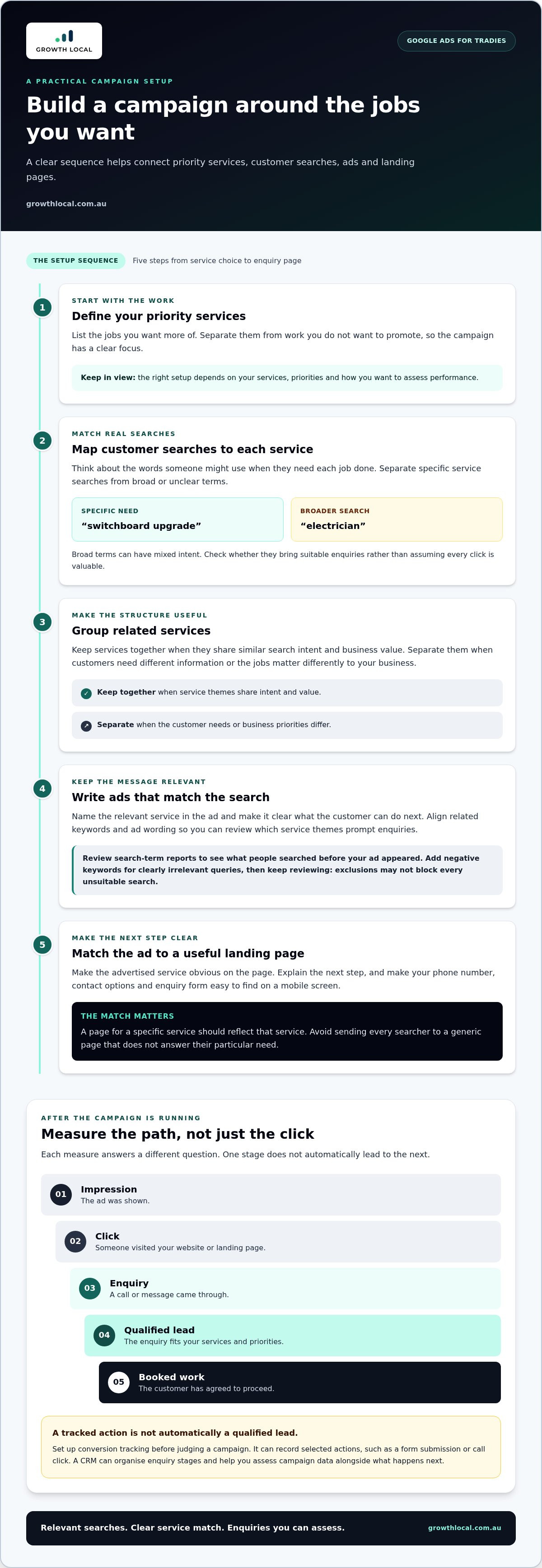
Put simply, paid search can buy visibility for relevant searches, but it cannot guarantee business results. An impression means the ad was shown. A click means someone visited your website or landing page. An enquiry is a call or message. A qualified lead is an enquiry that fits your services and priorities. Booked work means a customer has agreed to proceed. These are different stages, and one doesn’t automatically lead to the next.
How Google Search Ads reach people looking for a tradie
A searcher might enter a query such as “replace a leaking kitchen tap”. Your campaign targets relevant keywords, which help Google assess whether your ad may match that query. If it does, the ad could appear among the search results. For a broader overview of the platform and its campaign types, see What is Google Ads?
Not every searcher is ready to hire. Someone may be researching, comparing options or looking for instructions rather than a tradie. They still choose whether to click, then whether to call, submit a form or take another step. That’s why your target searches and landing page need to reflect the service you want to promote.
What Google Ads can measure, and what it cannot promise
Campaign reports can show impressions and clicks. Conversion tracking can record selected actions, such as a form submission or call click. These signals help you see whether an ad prompted a response. But a tracked action isn’t automatically a qualified lead, and a platform report can’t confirm by itself whether a job was quoted, accepted or completed.
Set up conversion tracking before judging a campaign. Without it, you may see website visits but have little evidence about which ads prompted enquiries. Then connect enquiry records to what happens next: whether the job fits, whether you followed it up and whether it became booked work. A CRM can organise these stages, so you can assess campaign data alongside actual sales activity.
With Google Ads for Tradies, focus on what the campaign can influence: visibility for selected searches, ad engagement and tracked actions. Measure lead quality and booked work through your follow-up process, rather than treating them as results the ad platform can promise. A lead generation system can connect campaign tracking with lead capture and CRM workflows, giving you a clearer view from first click to customer.
Build a Tradie Google Ads Campaign Around Services and Search Intent
A campaign is easier to manage when it’s built around the work you want, not a broad list of trade-related terms. Start with your services, match them to the searches customers use, then make sure each ad leads to a page that helps them take the next step. This gives you a clear structure to review and refine.
Use this setup sequence:
- Define your priority services. List the jobs you want more of and separate them from work you don’t want to promote.
- Map searches to each service. Think about the words a customer might use when they need that job done. Separate specific service searches from broad or unclear terms.
- Group related services. Keep services together when they share similar intent and business value. Separate them when customers need different information or the jobs matter differently to your business.
- Write ads that match the search. Name the relevant service and make it clear what the customer can do next.
- Build or choose a matching landing page. Check that the page reflects the advertised service and makes it easy to enquire.
Choose keywords that reflect the jobs you want
Start with the jobs on your priority list. A specific search such as “switchboard upgrade” signals a different need from a broad search such as “electrician”. Broad terms can have mixed intent, so check whether they bring in suitable enquiries instead of assuming every click is valuable. Review search-term reports to see what people searched before your ad appeared. Add negative keywords for clearly irrelevant queries, then keep reviewing the results because exclusions may not block every unsuitable search.
Match each ad to a useful landing page
If an ad promotes a particular service, make that service obvious on the landing page. Explain the next step and make your phone number, contact options and enquiry form easy to find on a mobile screen. Avoid sending every searcher to a generic page that doesn’t answer their specific need. When planning campaign investment, factor in the project and its requirements, and review the Google Ads pricing information.
Organise campaign structure for clear decisions
Align related keywords, ad wording and landing-page content so you can see which service themes are prompting enquiries. There’s no single structure that suits every tradie. The right setup depends on your services, priorities and how you want to assess performance. Google Ads for Tradies should make decisions clearer, not add admin. If you’d like help shaping a campaign around your services, book a campaign planning demo.
How to Judge Tradie Google Ads Beyond Clicks and Impressions
A busy campaign can still bring in the wrong work. To judge performance properly, follow the path from someone seeing an ad through to a job being booked. Each measure answers a different question: are people seeing the ad, responding to it, making a suitable enquiry and becoming customers? A high click count isn’t proof of success if those clicks aren’t leading to useful opportunities.
| Measure | What it tells you | What it doesn’t tell you by itself |
|---|---|---|
| Impressions | How often your ad was shown, a measure of reach. | Whether anyone noticed it or needed your service. |
| Clicks | How often people clicked through, a measure of response. | Whether they contacted you or were a good fit. |
| Enquiries | How many people made contact through a tracked action or recorded response. | Whether the job suits your services or priorities. |
| Qualified leads | Enquiries that match the work you can and want to take on. | Whether the customer accepts a quote or books. |
| Booked work | Jobs customers have agreed to proceed with, showing business value. | Whether every outcome came from one ad interaction. |
There’s no universal target that makes these numbers good or bad for every trade business. Compare them with your service priorities, job fit and follow-up records. Assess lead quality alongside cost and job fit, not by click volume alone.
Track enquiries and qualified leads separately
An enquiry is a contact action, such as a submitted form or a call. A qualified lead is an enquiry that fits your services and the type of job you’re looking for. Where tracking is configured, record useful actions such as completed forms or calls. Check that each tracked event represents a genuine contact attempt. If your settings count page views or button taps as leads, your reports may overstate demand.
Connect campaign reporting with actual job outcomes
Record where each enquiry came from and what service the person asked about in your CRM or another consistent tracking process. Then note whether it was relevant, quoted and booked. Reviewing these records alongside campaign data helps you identify which searches bring suitable work over time. Take care with attribution: customers may interact with your business in several ways before booking, so don’t automatically credit every sale to one ad.
Make each review practical
Review search terms, ad engagement, landing-page actions and lead quality together. If clicks are coming through but enquiries aren’t, check whether the page matches the ad and makes it clear how to get in touch. If enquiries seem to be missing from reports, check tracking before changing your targeting. Where practical, adjust one meaningful element at a time, then assess what changes.
For Google Ads for Tradies, a useful review connects platform activity to real conversations and booked jobs. That gives you a stronger basis for improving the campaign than chasing a bigger click count.
Improve Google Ads for Tradies Without Chasing Every Click
Worried your ad spend is going nowhere? Don’t make a snap decision based on clicks alone. Work through a simple review: check the searches triggering your ads, confirm tracking is working, assess whether enquiries fit your services, then compare the ad’s promise with the landing page. This helps you work out whether the issue is targeting, measurement, page content or follow-up.
Use the evidence to choose a sensible next step:
- Irrelevant searches keep appearing: review the search terms and consider carefully chosen negative keywords.
- Enquiries don’t suit your work: check keyword themes, ad wording and the service information on the landing page.
- Enquiries seem missing from reports: test tracking before changing campaign settings.
- Good-fit leads aren’t progressing: inspect how enquiries are recorded and followed up.
Respond to irrelevant searches and poor-fit enquiries
Look for recurring search queries that clearly don’t relate to services you provide or jobs you want. Add appropriate exclusions, then review search terms to make sure useful searches haven’t been caught up in the change. If people enquire but misunderstand what you offer, check whether your ad and landing page describe the service clearly. A more precise message can help set expectations before someone gets in touch.
Make response speed part of the campaign system
An ad can prompt someone to get in touch, but it doesn’t manage the enquiry or complete follow-up. Notifications, organised CRM records and automated intake can help capture what the person needs and keep the next action visible while you’re on the tools. Recording the lead source and service interest also makes campaign reviews more useful. Explore ideas for automated lead capture for service businesses and efficient tradie lead management as part of a connected workflow.
Set expectations before changing a campaign
Before deciding that Google Ads for Tradies is wasted spend, check that conversion tracking records the right actions. Then consider search relevance, service demand, the landing-page experience and what happens after an enquiry arrives. A low number of recorded leads could point to a tracking fault, not necessarily poor targeting. Make a clear, evidence-based adjustment and assess what changes, without expecting a fixed result or guaranteed outcome.
Growth Local connects Google Ads setup with lead capture and CRM workflows, helping keep campaign activity and enquiry handling organised.
Set Up Google Ads for Your Tradie Business With a Connected System
A campaign is easier to manage when it starts with a clear handover: what the business wants to achieve, which services matter most, how those services are grouped and what happens when an enquiry comes in. This turns Google Ads from a separate marketing task into one part of a practical lead generation process.
What a connected campaign setup should cover
Start by aligning your business goals with service priorities and the searches you want to reach. Campaign structure and ad messaging should reflect those priorities, while each landing page should make the next step clear. Configure tracking for meaningful enquiry actions and decide how enquiry details will reach the person responsible for follow-up. Reporting should help you assess lead quality and job outcomes, not just activity in the ad account.
How Growth Local can help tradies act on the framework
Growth Local sets up Google Ads and lead generation systems for Australian service businesses. Campaigns can be connected with CRM workflows, so enquiries and service interests are organised for follow-up rather than scattered across calls, inboxes and notes. This makes it easier to review where enquiries came from and what happened next.
CRM setup supports a consistent process for recording, assigning and tracking enquiries. Growth Local can also integrate an AI receptionist as part of your enquiry-handling system. This brings lead capture into the advertising workflow, while your team remains responsible for quoting and customer service.
For a broader view of lead generation for Australian tradies, consider how each step connects: the ad brings a potential customer to your business, the enquiry process captures what they need, and your follow-up moves the opportunity forward. The setup can be tailored to your services, workload and existing systems, but no campaign setup can promise a particular lead volume or booked-job result.
Choose a practical next step
Before making changes, note the services you want to promote and where enquiries currently get held up. Are calls or form submissions being recorded? Can you tell which service someone is asking about? Is there a clear next step for following up while you’re on a job? Your answers can help identify whether the priority is campaign structure, tracking or lead handling.
In a demo conversation, you can explore how Google Ads setup fits with your campaign goals and enquiry workflow. Bring your service priorities and the main gaps you’ve noticed, so the discussion can focus on a useful next step for your business.
Build the campaign around the work you want, then connect it to a system that helps you manage each enquiry. Take the next step with Growth Local.
Make Your Next Campaign Step Count
Your next step doesn’t need to be a major overhaul. Pick one service you want to promote, then define what a good enquiry looks like and where it should go. That gives you a practical starting point for shaping Google Ads for Tradies around the work your business wants to take on.
Next, look at the gap costing you the most time or clarity. It might be uncertainty about campaign structure, difficulty tracking enquiries or leads getting lost while you’re on a job. A connected setup can bring those moving parts into a clearer workflow, tailored to your priorities rather than a one-size-fits-all template.
To talk through a useful next step for your business, book a demo with Growth Local.
You’ve got a solid place to start. Build steadily, focus on suitable work and give your next campaign a clear path from enquiry to follow-up.
Frequently Asked Questions
Are Google Ads worth it for tradies?
They can be worthwhile if the campaign attracts enquiries for work your business wants and can take on. Before starting, decide what makes a lead valuable: the service requested, whether the job suits your capacity and whether it supports your business goals. Then review enquiries and booked work against your advertising spend. Google Ads for Tradies isn’t automatically worthwhile just because the ads receive attention.
How much should a tradie spend on Google Ads?
There’s no single budget that suits every trade business. Set a test budget your business can manage, based on the services you want to promote, your available capacity and the value of suitable jobs. Decide in advance what you’ll review, such as enquiry relevance and the spend associated with those enquiries. Don’t increase the budget just because clicks are coming in if the work isn’t a good fit.
How long does Google Ads take to work for a tradie?
There isn’t a reliable fixed timeframe for every campaign. The time it takes to judge performance depends on factors such as search demand, campaign setup, tracking and how often suitable customers make contact. Check that tracking records real enquiries before drawing conclusions, then look for patterns rather than reacting to a single quiet period. If the data looks wrong, investigate the setup before waiting for more results.
What is the difference between Google Ads and SEO for tradies?
Google Ads uses paid placements to gain visibility for selected searches, while SEO focuses on improving how your website appears in unpaid search results. Ads can support a campaign while you work on your website’s organic visibility, but each channel needs its own measurement. Track which enquiries came through an ad and which arrived through an unpaid result, so you can assess their contribution separately.
Why are my Google Ads getting clicks but no calls?
Clicks without calls can point to a mismatch between the search, your ad and the landing page. Check whether the search terms relate to your service, whether the page makes your offer clear and whether your phone number is easy to use on mobile. Also test that calls and forms are being recorded properly. A click report alone won’t show whether someone tried to contact you and tracking missed it.
Should tradies use Google Search Ads or Performance Max?
Google Search Ads are a practical option when you want to focus on people searching for specific services. Performance Max uses automation to serve campaigns across Google’s available advertising channels, so it can require broader campaign inputs and a different approach to reviewing results. The better fit depends on your goals, assets, tracking and how much visibility you need into search activity. Choose based on what you can measure and manage.
Can Google Ads guarantee booked jobs for tradies?
No. Google Ads can help your business appear to people searching for relevant services, but it can’t control whether they enquire, suit the job or accept a quote. Bookings also depend on factors outside the ad, including service fit, availability, pricing and follow-up. Track enquiries through to their outcome, then use that information to assess the campaign rather than relying on clicks or platform-reported actions alone.


