

Cost to Set Up Marketing Automation in Australia: A Practical Buying Guide
What if the cost to set up marketing automation Australia businesses face depends less on the software and more on the work needed to make it fit? When weighing up the cost to set up marketing automation Australia, it’s easy to focus on the subscription and overlook the effort involved in organising CRM data, connecting systems and building useful workflows.
That uncertainty is understandable. A complex platform can look impressive, but paying to build features your team won’t use wastes time and money. Start with how your business captures leads, organises them and follows up. Then choose the tools and workflows that support those steps.
This guide explains what affects implementation effort, how software fees differ from setup work, and how to assess an implementation scope without relying on generic cost ranges. You’ll also see how to choose a manageable first phase, such as connecting lead capture to your CRM and creating a reliable follow-up process. Growth Local designs CRM and marketing systems around business workflows, so the technology supports how your team works.
Key Takeaways
- The cost to set up marketing automation Australia businesses face depends on workflow complexity, data quality, integrations, channels and training, not just the software subscription.
- Separate one-off implementation work from ongoing software fees and optimisation to understand what your budget needs to cover.
- Compare self-managed configuration, platform-led onboarding and tailored implementation by looking at scope, integrations, training and who manages the system afterwards.
- Scope a practical first phase by mapping your process, choosing a bottleneck, defining a workflow, listing connections and agreeing how you’ll measure progress.
- A focused setup can help capture leads, organise them in your CRM and support consistent follow-up before you add more complex automation.
What does marketing automation setup cost actually cover?
Marketing automation setup is the work of configuring software, data and workflows around the way a business handles leads and customers. It turns a platform’s features into a process your team can use, rather than leaving you with a subscription and a blank dashboard. The cost to set up marketing automation Australia businesses face depends on the project’s scope, not just the tool selected.
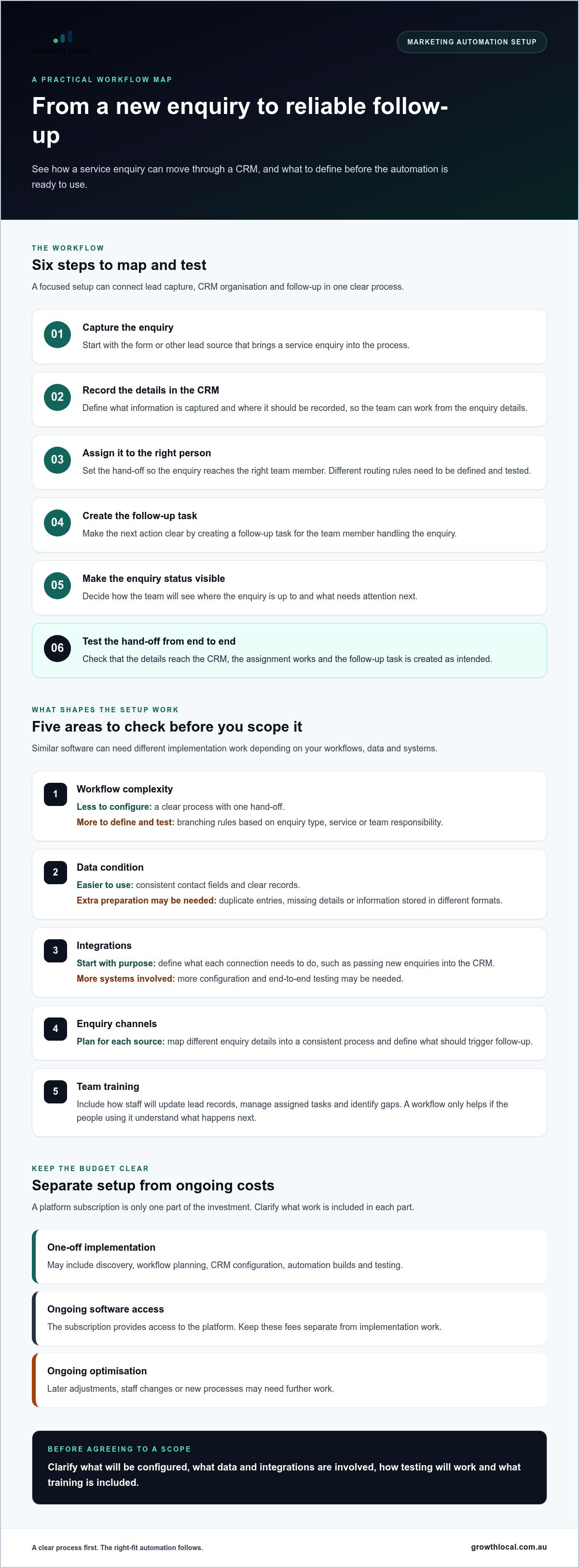
Separate three parts when planning: one-off implementation, recurring software access and ongoing optimisation. Implementation might include building and testing workflows, while the subscription provides access to the platform. Later adjustments, staff changes or new processes may need further work. A generic estimate can’t show what your business needs until the scope is clear.
What is included in a marketing automation setup?
Possible work includes discovery, workflow planning, CRM configuration, automation builds and testing. The agreed scope determines which tasks are included and how much attention each needs. A straightforward process with clean data and one lead source is different from a setup involving several sources, existing records that need organising and rules for routing enquiries to different people.
For example, a service enquiry could be captured through a form, recorded in the CRM, assigned to the right team member and given a follow-up task. The setup needs to define what happens at each step, what information is recorded and how the team can see the enquiry’s status. Testing then checks that the hand-off works as intended.
Why software fees are not the whole investment
A subscription pays for platform access. Implementation may also involve configuring the system, preparing existing data, connecting tools and helping the team learn the process. Depending on your current setup, platforms may overlap in what they do or need connections to share information. List the systems and processes in scope before comparing implementation proposals, so you can see what work is required.
Marketing automation is part of a wider lead-handling system. Capturing an enquiry is only useful if the details reach the right place and someone can act on them. The lead generation system setup framework explains how lead capture, CRM organisation and follow-up fit together. For a foundational overview of the concept, see What is Marketing Automation?.
Before agreeing to a scope, clarify what will be configured, what data or integrations are involved, how testing will work and what training is included. Separate those implementation tasks from ongoing platform fees and future optimisation. This gives you a practical basis for understanding the cost to set up marketing automation Australia businesses need, and helps keep the first phase focused on the processes your team uses most.
Which factors drive marketing automation setup costs in Australia?
Two businesses can use similar software and still need very different implementation work. One may need a single enquiry workflow; another may have several lead sources, existing CRM records and different follow-up rules for each team. Setup scope depends on workflows, data and integrations. These are the practical starting points for understanding the cost to set up marketing automation Australia projects require.
Use these five areas to identify where the work sits:
- Workflow complexity: A clear process with one hand-off is simpler to configure than branching rules based on enquiry type, service or team responsibility. Each rule adds decisions to document and scenarios to test.
- Data condition: Consistent contact fields and clear records are easier to use than duplicate entries, missing details or information stored in different formats. Reviewing and preparing data can add work before a workflow is ready.
- Integrations: Each connection between a lead source, CRM or other system needs a defined purpose. The more systems involved, the more configuration and end-to-end testing may be needed.
- Channels: Handling enquiries from several sources can mean mapping different information into one consistent process. The setup also needs to reflect how each source should trigger follow-up.
- Training: A workflow only helps if the people using it understand what happens next. The scope may include showing staff how to update lead records, manage assigned tasks and identify gaps.
How existing CRM data and integrations affect scope
Before migrating records or configuring automation, review the CRM’s existing fields, duplicate contacts and enquiry sources. This helps show whether the information is consistent enough to support reliable routing and reporting. Each connection should solve a clear business need, such as passing new enquiries into the CRM, rather than adding complexity for its own sake. For more CRM-specific considerations, see this CRM implementation guide for small business.
The Australian training register lists an Advanced Diploma of Marketing Automation in Australia. It’s a reminder that effective implementation involves more than switching on software: the process, data and system connections need to work together.
How many workflows should you automate first?
Start with a frequent, measurable bottleneck, such as acknowledging an enquiry or assigning a new lead. A single focused workflow is easier to define and test than a multi-stage system spanning several teams and channels. Once the first process is working and staff know how to use it, decide what to improve next. Not every business needs advanced AI or complex branching logic.
To keep the scope grounded, write down where enquiries come from, who handles each type and what the next action should be. A clear brief makes it easier to define the work and assess the cost without relying on broad estimates. Growth Local’s marketing system setup can turn those requirements into a system built around your team’s lead-handling process.
How should you compare marketing automation setup options?
A proposal is only useful if you can see what the work covers. Compare the same deliverables across each option, not just headline figures. Check which workflows are included, how connections will be handled, who tests the setup and what happens at handover. A useful proposal ties each implementation task to a defined workflow or business need.
Use this table to compare the level of involvement and responsibility in each approach:
| Approach | Setup scope | Integrations | Training | Ongoing responsibilities |
|---|---|---|---|---|
| Self-managed configuration | Your team plans and configures workflows using available platform tools. | Your team connects and tests the required systems. | Usually handled internally, using platform guidance or your own process. | Your team maintains workflows, troubleshoots issues and manages changes. |
| Platform-led onboarding | Guidance is provided for getting started with the platform. The included tasks depend on the onboarding scope. | Connections may need to be configured by your team or covered separately. | May focus on using the platform and its core features. | Your team typically manages ongoing changes and day-to-day use. |
| Tailored implementation | Work is planned around agreed business processes, CRM structure and workflows. | Connections are scoped around the systems and information flows required. | Can be included to help staff use the configured process. | Responsibilities for support, updates and future changes should be agreed. |
Self-managed setup or professional implementation?
Self-management may suit a business with time to plan, configure, test and troubleshoot its own workflows. Account for that time too, particularly if staff are balancing setup with their regular work. Expert help can be useful when CRM structure or workflow design is unclear, or when several processes need to work together. Neither approach is automatically cheaper or better. The right fit depends on your team’s capability and available time.
What should a clear implementation proposal spell out?
Look for a defined outcome, the workflows included, integration assumptions and who is responsible for testing. The proposal should separate software subscriptions and ongoing support from one-off setup work. It should also explain how changes outside the agreed scope are handled, what the handover includes and what your team will manage afterwards. This makes it easier to compare the work and avoid paying for tasks that don’t solve a stated need.
For example, two proposals may both describe lead follow-up automation, but one may include workflow mapping and testing while the other covers configuration only. Check how each deliverable supports the agreed process, then consider what your staff will need to do before and after launch. Growth Local’s marketing system setup is designed around your business workflows and lead-handling needs.
How can you scope a practical automation budget?
A clear scope helps you plan for the work your business actually needs, rather than paying to build every possible feature at once. Use this five-step method to turn a follow-up problem into a practical first phase:
- Map the process. Record where enquiries arrive, who handles them and what happens next. Note where details are copied manually, follow-up stalls or ownership becomes unclear.
- Choose a bottleneck. Pick one frequent issue that affects the team’s ability to manage enquiries, such as missed acknowledgements or leads waiting to be assigned. Keep the first project focused.
- Define the workflow. Describe the trigger, the action that should follow and who is responsible. For example, a new enquiry might create a CRM record and prompt an assigned team member to follow up.
- List the connections. Name the lead sources and systems the workflow needs. Include only connections that support the process, so the scope doesn’t expand to tools with no clear role.
- Agree success measures. Decide how you’ll assess whether the workflow is operating as intended, using information your team can track consistently.
Write a useful first-phase project brief
Turn those steps into a short brief: describe where enquiries come from, who handles them, where follow-up breaks down, which workflow comes first, what systems it uses and who owns each task. Add the reporting information your team needs to see. This gives everyone a shared picture of the intended process and helps keep the first phase manageable.
Sales workflow planning can clarify how responsibilities and next actions fit together. As you shape your brief, focus on the hand-offs your team needs to manage, not just the automation itself.
Choose measures that show whether the setup is working
Choose measures your existing systems can record reliably. Response coverage can show whether enquiries are being acknowledged, follow-up completion can show whether assigned actions are being handled, and lead status visibility can show whether the team can identify each enquiry’s stage. These are operational checks, not promises of a particular sales result.
Separate activity measures, such as completed follow-ups, from business outcomes, such as enquiries progressing to a sale. Review the workflow once it’s in use to identify missed steps, unclear ownership or information that isn’t being recorded. That review helps you decide whether to refine the first process or add another one.
Keep must-have launch requirements separate from later enhancements. If AI features, extra channels or complex branching don’t solve the bottleneck you’ve chosen, leave them out of the first phase. A well-defined brief gives you a clearer basis for assessing the cost to set up marketing automation Australia businesses may face, without relying on generic ranges.
How Growth Local can implement a fit-for-purpose system
A system should fit the way your team works, including the hand-offs and exceptions that don’t always show up in a process diagram. Growth Local works with Australian service businesses to design and implement lead generation and marketing systems around agreed requirements, so the technology supports daily operations rather than creating extra admin.
A setup shaped around your lead-handling process
Start with the details behind the workflow: what information staff need at each stage, who is responsible for acting on it and what should happen when an enquiry doesn’t follow the usual path. Those decisions help shape CRM configuration and marketing workflows, and make it easier to identify gaps before the process is in use.
It’s also useful to decide what the team should be able to manage themselves after implementation. For example, staff may need a clear way to update a lead’s status or pass an enquiry to a colleague. Agreeing these practical requirements early helps keep the setup manageable and gives the team a clearer handover.
For solar businesses, Growth Local provides specialised solar CRM setup. The workflow and configuration are shaped around the requirements of the solar business using it.
What to expect when discussing your project
Bring a rough picture of your current process, including the tools you use, the sources of enquiries and the point where follow-up most often breaks down. You don’t need to arrive with a technical plan. A real example of where work gets delayed or information goes missing is enough to make the discussion practical.
Use the conversation to clarify what matters most in the first phase, which system connections support that priority and what your team needs to manage after handover. You can also identify what should wait until the initial process is running smoothly. This keeps the project grounded in an operational need instead of a wish list of features.
Growth Local can turn those requirements into a practical implementation scope. Bring the process as it works today, including the awkward bits, and use it as the starting point for a system that fits your team.
Make your next step a focused one
Refine your automation plan before extra features and disconnected tools make it harder to manage. Start with the lead-handling problem you most want to fix, then shape the system around that priority. This keeps the cost to set up marketing automation Australia businesses need tied to a clear purpose, not a long wish list.
Growth Local specialises in lead generation system setup for Australian service businesses, including CRM setup, marketing system setup and AI receptionist integration. The aim is to create a practical foundation your team can build on as its processes and needs evolve.
You don’t need every detail mapped out before taking the next step. Bring your current tools, lead sources and main follow-up challenge, and use the conversation to define a manageable starting scope.
A well-scoped first phase can give your team a clearer path from enquiry to follow-up. Start with the process you want to improve and build from there.
Frequently Asked Questions
How much does it cost to set up marketing automation in Australia?
There isn’t one price that applies to every business. To get a useful estimate, provide a written brief that sets out the workflow, systems involved, data condition and training needs. Ask for the assumptions, exclusions and acceptance criteria to be stated clearly, and clarify how changes to the agreed scope will be handled. This helps you assess whether the proposed work covers the outcome you need.
What is included in marketing automation implementation?
The inclusions depend on the project, so look beyond a general promise to “set up automation”. A detailed scope can specify who approves workflow decisions, which sample scenarios will be used to check the build and what documentation your team receives. It should also clarify who owns user access and system settings after handover. These details help prevent confusion about responsibilities once implementation is complete.
Is marketing automation worth it for a small service business?
It may be a good fit if staff spend regular time on repeatable admin that could be handled more consistently. To assess the business case, estimate how much team time the task takes and what that time could be used for instead. Consider whether the process happens often enough to justify changing how the team works. If it’s an occasional task, a simpler manual process may be more practical.
Can I use my existing CRM for marketing automation?
Your existing CRM may work if it supports the features your intended process relies on and your team has the access needed to manage it. Consider how proposed changes could affect current reports, permissions and day-to-day sales records. Keeping a copy of important data and agreeing how changes will be handled can also help reduce disruption during implementation.
What is the difference between marketing automation software and setup?
Software is the platform your business uses; setup is the project work that makes it fit your operation. Think of the software as the workspace and setup as arranging it around how your team handles customer information. When reviewing options, consider not only what the platform can do, but also whether staff can maintain the processes once they’re in place. The right balance depends on your internal capability and priorities.
How do I reduce marketing automation setup costs without cutting corners?
Make implementation smoother by preparing decisions and access before work begins. Nominate someone who can approve process choices, gather the information the project needs and make sure relevant staff are available to review the setup. Avoid late changes caused by conflicting instructions or missing details. These steps won’t remove necessary work, but they can help reduce avoidable delays and keep the agreed project focused.
Do I need an AI receptionist as part of marketing automation?
No. Consider one only if phone interactions are a meaningful part of how prospective customers first reach your business. Before including it, decide what information needs to be captured, how enquiries should be directed and what should happen when a call needs personal attention. These boundaries help you assess whether AI receptionist integration fits the customer experience you want, rather than adding technology without a defined role.


