

Automated Lead Generation for Tradies: Grow Your Business
What if more enquiries weren’t the goal, and better-fit jobs were? Lead Generation for Tradies works best when it attracts customers who need the services you offer, are within your service area and fit your current capacity. A packed inbox means little if you’re chasing unsuitable work while good jobs wait.
If work comes in bursts, it can be hard to plan your workload or grow with confidence. And when every lead needs follow-up, quoting and running jobs can take a back seat. That’s frustrating when you’re already doing the heavy lifting on site.
This guide covers practical ways to assess lead quality, compare channels such as Google Ads, social media, Local SEO and referrals, and track which activity brings useful enquiries. You’ll also learn how connected marketing and CRM systems can capture enquiries and organise follow-up, so you can spend less time chasing and more time choosing the right work.
Key Takeaways
- Lead Generation for Tradies works better when you start with the jobs you want, the areas you serve and the work you can take on.
- Assess each enquiry by its source, service fit and progress towards a quote, not just by how many come in.
- Compare search, paid advertising, social media and referrals by the role each channel plays in helping customers find you.
- Build a simple plan: set job priorities, check capacity, choose channels, track enquiries and review what’s working.
- Connected marketing and CRM workflows can help capture enquiries and show which activity is bringing useful opportunities.
Why lead generation for tradies is about predictable, suitable work
Busy weeks followed by quiet ones make it difficult to plan upcoming jobs, manage cash flow or decide when to take on more work. A steady stream of enquiries can help with planning, but volume alone won’t solve the problem if people need services you don’t provide or are outside the areas you serve.
Lead generation is the process of attracting prospective customers and giving them a clear way to enquire. The Lead generation overview describes its role in marketing. For a trade business, the practical test is what happens after someone gets in touch: can you identify what they need, judge whether it suits your business and follow up without losing track?
Useful lead generation makes it easier for suitable customers to find you, enquire and take the next step. That’s the point of Lead Generation for Tradies: build visibility with the customers you want to serve, then assess each opportunity against your services and capacity. Consistent marketing can support planning, but it can’t guarantee demand, bookings or revenue. Treat it as a way to make better-informed decisions, not a promise of a full schedule.
What counts as a good lead for a trade business?
A good lead matches the services you provide, the kind of job you want, the customer’s timing and your practical capacity. An enquiry is a person asking about work. It becomes a qualified opportunity when you have enough detail to judge whether it’s a good fit. A booked job comes later, once the customer agrees to proceed and the work is scheduled.
For example, a carpenter looking to take on kitchen renovations might receive an enquiry about a small repair. It’s a genuine contact, but not necessarily the right opportunity for the business’s current priorities. Recording the requested work and timing helps distinguish interest from a job worth quoting.
Why more enquiries do not always mean better work
Enquiries for services you don’t offer, jobs outside your preferred scope or work you can’t fit in all take time to screen and respond to. Track enquiry volume, but assess quality too. Note the service requested, whether it fits your priorities, whether you have capacity and whether it progresses to a quote. That gives you a clearer picture than a raw contact count.
For a wider look at the topic, explore this guide to lead generation for Australian tradies. Next, set practical criteria for the services, jobs and workload your marketing should support.
How to assess tradie lead generation before choosing channels
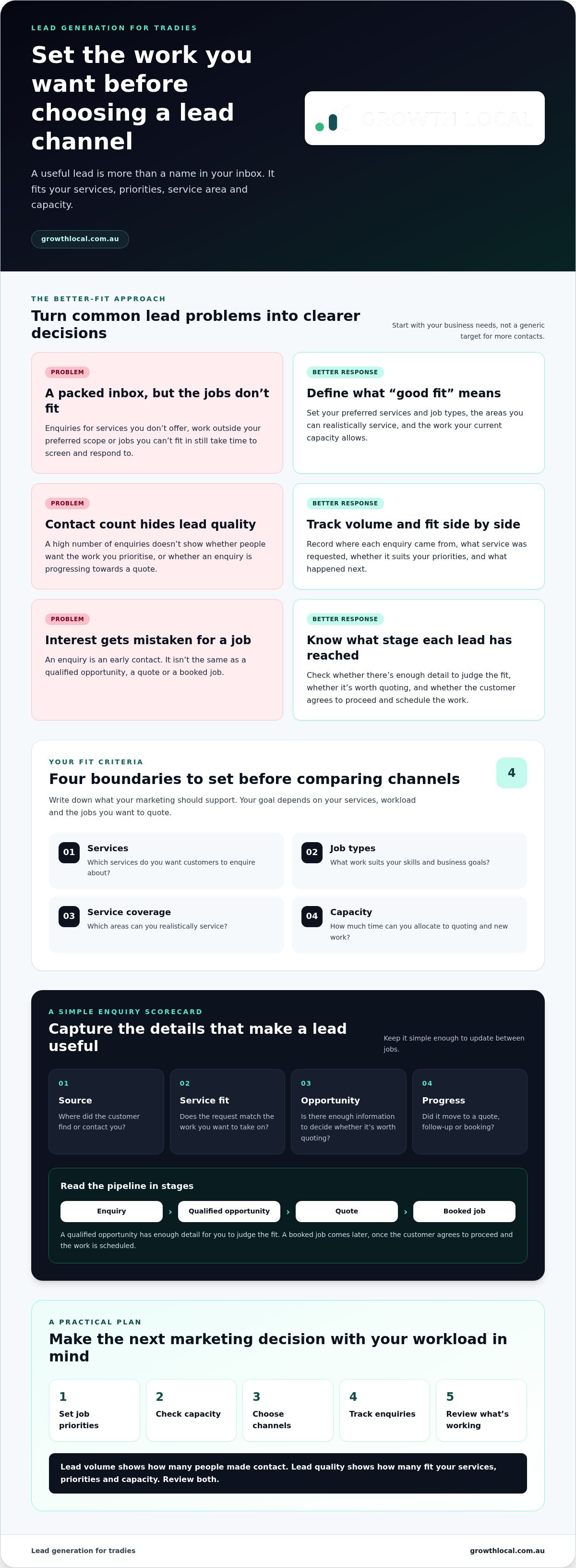
Before putting time or budget into a channel, decide what a useful enquiry looks like for your business. Lead Generation for Tradies should be assessed against the work you want and can deliver, not a generic target for more contacts. Your priorities will depend on your services, workload and the jobs you want to quote.
Set the business goal before selecting a lead channel
Start by naming the main job marketing needs to do. Is the priority to improve visibility, attract enquiries for a particular service or bring in more opportunities that suit your trade? Then check whether you have the quoting, scheduling and delivery capacity to act on those enquiries. A channel can attract attention, but it won’t solve a bottleneck in your work calendar.
Use this checklist to define the boundaries for your marketing:
- Services: Which services do you want customers to enquire about?
- Job types: What kind of work suits your skills and business goals?
- Service coverage: Which areas can you realistically service?
- Capacity: How much time can you allocate to quoting and taking on new work?
Write down your answers before comparing channels. A business aiming to fill schedule gaps with a particular service may need a different approach from one focused on making a newer offering more visible. There’s no universal enquiry target for every trade business. Set a goal that reflects your current workload and review it when your capacity changes.
Choose measures that show whether enquiries are useful
Keep your scorecard simple enough to update between jobs. For each enquiry, record where it came from, what service the person asked about, whether it matched your priorities and what happened next. An enquiry is an early indicator. A suitable opportunity, quote and booked job are later stages, so don’t treat them as interchangeable.
- Source: Where did the customer find or contact you?
- Service fit: Does the request match the work you want to take on?
- Opportunity: Is there enough information to decide whether it’s worth quoting?
- Progress: Did it move to a quote, follow-up or booking?
Lead volume tells you how many people made contact; lead quality tells you how many fit your services, priorities and capacity. Review both. If enquiries come in but few suit the work you want, revisit your channel message, targeting or service information. If suitable opportunities aren’t progressing, look at what happens after capture. This guide to efficient tradie lead management can help you think through follow-up.
Use these measures to spot what needs adjusting, rather than assuming a channel will guarantee bookings or revenue. A connected lead generation and CRM system can help organise enquiry sources and follow-up, giving you a clearer view of the pipeline.
Which lead generation channels suit different tradie goals?
Each channel helps customers find and assess a trade business in a different way. Search can reach people already looking for a service, while social advertising can put your work in front of people who may not be actively searching. Referrals draw on existing trust. The useful question isn’t which channel is best for every tradie, but which one matches your customers, goals and capacity.
| Channel | Customer intent and discovery | Setup considerations | Useful measures |
|---|---|---|---|
| Search and Local SEO | Connects with people looking for a trade service or researching options. | Keep service information clear and relevant to the areas you serve. | Enquiry source, service fit and progression to a quote. |
| Paid search advertising | Can show ads to people searching for particular services. | Choose relevant search themes and make the enquiry path clear. | Enquiries by service, qualified opportunities and quotes. |
| Social media advertising | Introduces your business while people browse, rather than only reaching active searchers. | Use a clear message and imagery that reflects the work you want. | Enquiries, requested job types and fit with your priorities. |
| Referrals | Introduces your business through recommendations and existing relationships. | Make it easy for customers and contacts to understand what work you take on. | Referral source, service fit and next step. |
Different jobs in the mix
Search is useful when a prospective customer is actively looking for a service. Paid search places advertising in that search context; social advertising reaches people as they discover or browse, rather than waiting for them to look up a trade. Referrals bring in people through recommendations. Each has a different role, and none guarantees enquiries or booked work.
Choose channels by matching customer intent with the work your business has capacity to deliver. If you want to promote a particular service, search activity may connect with existing demand, while social content can introduce that service to a broader audience. These channels can work together if you can manage the enquiries they generate.
Make it easy to enquire and feel confident
A channel can bring someone to your business, but your website needs to help them take the next step. Explain which services you provide, the types of jobs you take on and where you work. Give visitors a straightforward way to enquire, with enough guidance to describe the job. Clear information can reduce avoidable back-and-forth before you understand what they need.
Reviews and referrals can act as trust signals as people consider their options. Local SEO supports visibility in local searches by helping your services appear relevant to the areas you serve across Australia. For a deeper look, explore a guide to Local SEO for tradies.
Growth Local can connect channels such as Google Ads, Facebook Ads and Local SEO with enquiry capture and CRM workflows. You can talk through how a lead generation system could fit your business.
How to build a practical lead generation plan around your trade
A workable plan doesn’t need a complicated marketing calendar. It needs clear job priorities, an honest view of capacity and a simple way to see whether enquiries are progressing. Use this five-step process to turn Lead Generation for Tradies into a practical system you can adjust as your workload changes.
- Define the work you want. Write down the services and job types you want to attract, along with the work you’d rather not prioritise. Be specific enough to guide your website content, ads and other marketing. Output: a short list of priority services and suitable jobs.
- Check your capacity. Look at how much time you can realistically set aside for quoting and delivering new work. Include practical constraints such as existing commitments, travel across your service area and the jobs you can take on. Output: a clear view of what you can accommodate now.
- Select channels that fit the brief. Choose channels based on how customers discover your services and the work you’re trying to attract. Start with activity you can manage properly, rather than spreading yourself across every option. Output: a channel choice tied to a business priority.
- Set up basic tracking. Make sure each new enquiry can be recorded with its source, requested service and current status. A CRM or consistent tracking sheet can help keep this information in one place. Output: records you can compare, not a pile of unlabelled contacts.
- Review fit and adjust. Look for patterns in which sources bring enquiries that match your priorities and progress towards a quote or booking. If a channel brings the wrong type of request, refine its message or focus. If good-fit enquiries stall, review the next step in your process. Output: one clear change to test or a reason to keep your current approach.
Turn job priorities and capacity into a clear brief
Before launching activity, combine your priority services with your capacity notes. If you want more of a particular job type but have limited quoting time, make that priority clear while keeping the workload manageable. This gives your marketing a useful boundary and creates a practical starting point for lead generation system setup in Australia, with channels and enquiry workflows organised around how your trade business operates.
Track what happens from first enquiry to business outcome
Use the same tracking fields across channels: source, requested service and the next meaningful status, such as reviewing the enquiry, preparing a quote or booking the work. Consistent records let you compare like with like and see whether a channel is attracting the jobs you set out to win. A simple record is more useful than a detailed dashboard you don’t have time to maintain. For ideas on connecting enquiry capture and workflow, explore a guide to automating lead generation for Australian service businesses.
There’s no need to overhaul everything at once. Make one evidence-based adjustment, then keep recording what happens. Growth Local helps Australian service businesses set up connected lead generation, marketing and CRM systems around their workflows.
How Growth Local sets up lead generation systems for tradies
Good marketing can create extra admin if enquiries land in different places and it’s hard to see what needs attention. Growth Local helps Australian tradies organise the digital systems behind Lead Generation for Tradies, from channel setup to enquiry capture and CRM workflows. The focus is a practical system that supports your business process, not a promise of a set number of leads.
Growth Local sets up the infrastructure behind marketing activity. Google Ads, Facebook Ads and Local SEO can each play a different part in your channel strategy. The right mix depends on the services you want to promote, how customers find those services and what your business can manage.
What connected marketing and CRM setup can support
When channel activity and enquiry information sit within an organised workflow, it’s easier to track where contacts came from and what they asked about. CRM setup gives your business a structured place to manage enquiries and customer information. That makes the next step easier to see, rather than leaving details scattered across messages, notes and inboxes.
An AI receptionist can support automated lead capture and an initial customer interaction. It’s a technology-led part of the enquiry process. Together, marketing systems, CRM workflows and automated capture can connect customer discovery with the work that follows, while keeping the setup practical for a trade business.
Growth Local configures digital infrastructure around your business needs. Marketing activity can attract attention, enquiry capture can gather information, and CRM workflows can organise what happens next. These systems support visibility across the pipeline, but they don’t guarantee demand, bookings or revenue.
Choose a useful next step for your business
You now have a framework to decide what work to prioritise, how much capacity you have, which channels may suit your goals and what to measure. Bring those decisions into a practical discussion about the systems your business needs. That keeps the focus on your workflow and priorities, rather than adopting technology for its own sake.
A demo is a chance to talk through how lead generation, marketing setup and CRM workflows could fit together for your trade business. The focus is on understanding the system requirements and how they support your process.
Make your next growth move with confidence
You don’t need to overhaul your marketing to make progress. Pick one practical improvement that will make it easier to attract or assess the work you want, then pay attention to what happens. A clearer direction can help you make better decisions before adding activity to an already busy schedule.
That’s the value of a considered approach to Lead Generation for Tradies: it gives your business a way to build on what’s working while staying realistic about the jobs you can take on. Growth comes from informed adjustments, not chasing every new channel or filling the diary at any cost.
If you’re ready to map out a system that fits your trade and business priorities, book a lead generation system demo with Growth Local.
A more organised path to the right enquiries starts with one clear decision. You’ve got this.
Frequently Asked Questions
Is lead generation the same as advertising?
No. Advertising is one way to attract attention, while lead generation includes the steps that help a prospective customer discover your business and make an enquiry. For example, an advert might point someone to a service page with a phone number or enquiry form. With Lead Generation for Tradies, judge the activity by whether it connects the right people with a clear next step, not simply by whether an advert appeared.
Can tradies generate leads without buying shared leads?
Yes. You can attract enquiries directly through your website, search visibility, paid advertising, social media and referrals. A customer might find your service page through search, see your work on social media or get your details from someone they trust. Choose a mix that suits your trade and the time you can spare to respond, then record how each enquiry found you.
How much should a tradie spend on lead generation?
There’s no single marketing budget that fits every trade business. Set an allowance based on the services you want to promote, the channels you plan to use and the amount of work you can take on. Keep marketing spend separate from other operating costs so you can review it clearly. Then compare the investment with the quality and progress of enquiries, rather than relying on a generic industry average.
What happens if lead generation brings in enquiries for the wrong jobs?
Treat unsuitable enquiries as a clue that some part of the message or targeting needs attention. Check whether the request came from a particular advert, page or referral, and compare it with the work you want to book. If a service page leaves your job scope unclear, update its wording. If one campaign attracts mismatched requests, refine its focus and note what changes.
Do tradies need a website to generate leads?
No, a website isn’t the only way a customer can get in touch. Referrals, social media and advertising can also prompt enquiries. A website can give people one reliable place to understand your services, see what types of work you take on and find your contact details. Its value depends on whether the information is clear and the next step is easy, not simply on having a site.
How can I tell whether lead generation is working for my trade business?
Look beyond the number of new contacts. Note the source, the service requested and whether the enquiry led to a useful next step, such as a quote or booking. A channel with fewer enquiries may still be worth attention if those contacts match your preferred jobs. Compare results with your business goals and available workload, rather than expecting every channel to perform identically.
Can lead generation work for a small trade business?
Yes. A small business can start with a focused plan that suits its workload, rather than trying to maintain every marketing channel at once. Choose one priority service to promote and make sure there’s a manageable way to record enquiries. Clear, consistent information helps you see what’s happening without adding unnecessary admin. Keep the process simple enough to maintain alongside quoting and jobs.


